– It’s not the end of the world – and a round table of experts from the UPV analyze the international geopolitics of R&D

The Polytechnic City of Innovation brought together more than 300 people in a meeting where the international analysis media outlet, El Orden Mundial, and other leading voices on the national geopolitical scene offered a comprehensive look at the global economic and technological power of R
The Universitat Politècnica de València (UPV), through the UPV Innovation Knowledge Transfer Office, held the conference “The New Geopolitics of Research” on October 28. The meeting brought together leaders from the scientific, academic and political fields to reflect on the role of R in an increasingly competitive and multipolar global context.
The event, open to the university community, the innovative ecosystem and citizens, offered a comprehensive look at how research, development and innovation have become determining factors in global economic and technological power.

An Innovative Format to Understand the Strategic Role of Knowledge in the World
The conference was structured in four blocks, combining institutional analysis, creative dissemination and expert debate.
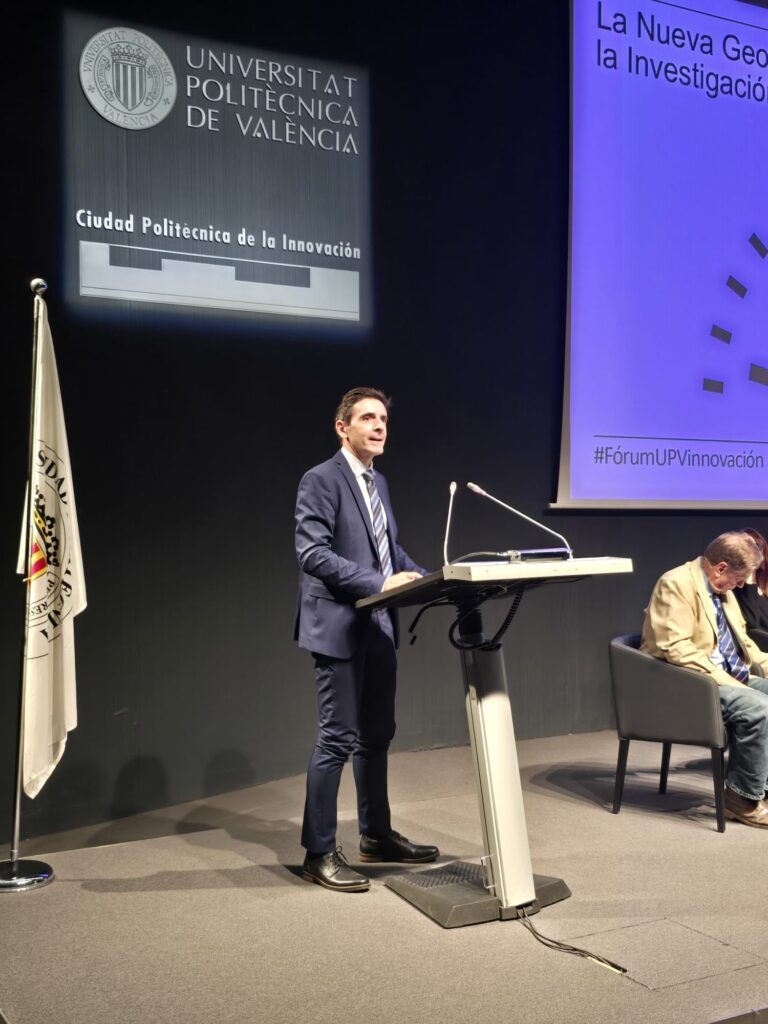
The Rector of the UPV, José E. Capilla, opened the event, underlining the great global challenges: the rapid technological evolution —with special emphasis on artificial intelligence—, sustainability in the face of population growth and the need to reinforce European technological sovereignty. He also highlighted the role of the UPV in strategic projects, such as the chip prototype factory in Valencia or the campus in China (Hangzhou), as examples of internationalization and applied innovation.
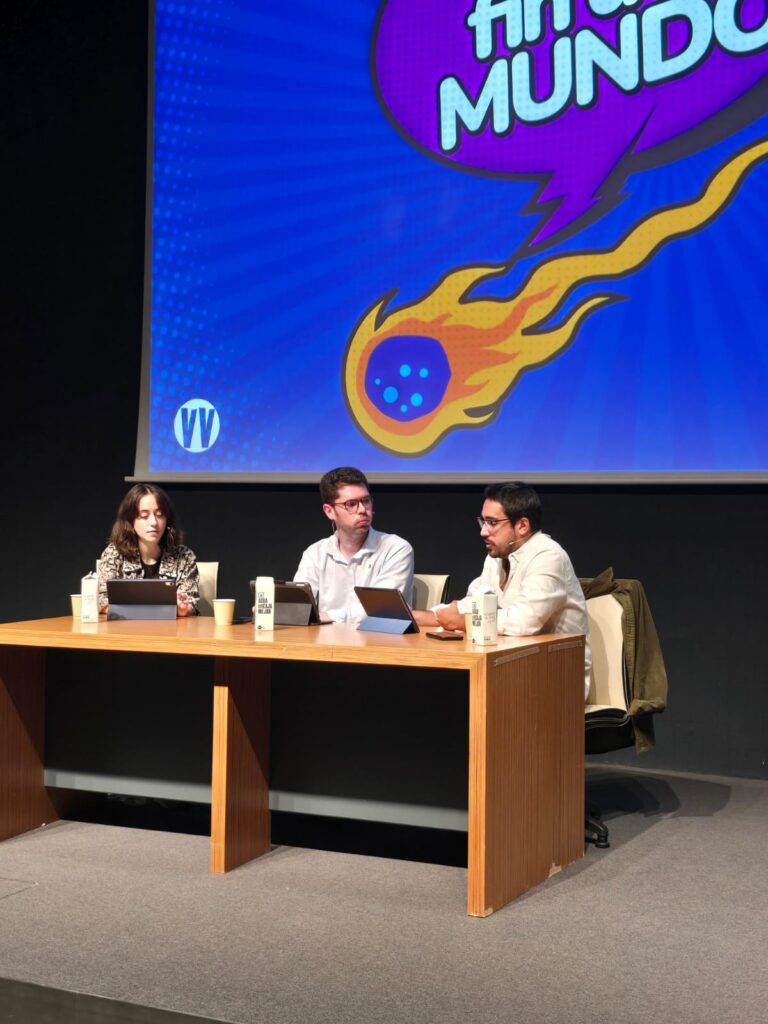
Next, the team from El Orden Mundial (EOM), a leading media outlet in international analysis, performed the next podcast of their series “No es el Fin del Mundo” in the auditorium of the Polytechnic City of Innovation. In a fresh and informative tone, the El Orden Mundial team, Fernando Arancón, Eduardo Saldaña and Alba Leiva, addressed how RDI influences the redistribution of global power. Historical and current examples were reviewed —from the space race to the semiconductor industry— to explain the relationship between knowledge, industrial development and geopolitics.

R as an Engine of Global Power
Among the main ideas highlighted in this unique edition of the podcast series “No es el fin del mundo” was the detailed analysis of the global distribution of investment in RD, led by Israel (6% of GDP), followed by South Korea, the USA, Japan or Germany. Spain, with 1.49%, shows sustained growth but still with a strong public component.
The EOM team’s debate underlined that success in innovation depends on solid university-business ecosystems and the capacity to attract and retain global talent.
The role of patents as an indicator of technological power was also discussed —China is today the world leader in registrations—, as well as the ethical and strategic dilemmas between international collaboration and competition.
The tension between open science and national interests was identified as one of the most relevant challenges of the 21st century in the global future of research.
Round Table: Spain Facing the Challenge of European Scientific Leadership
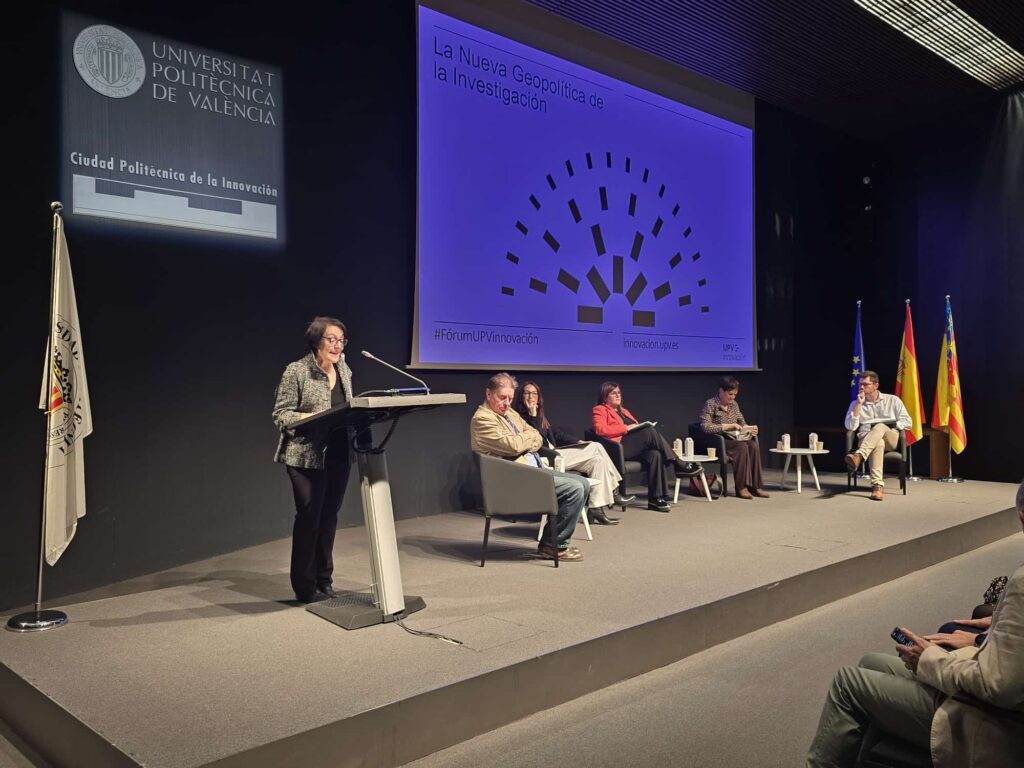
The final round table was presented by Belén Picó, Vice-Rector for Research at the UPV, and moderated by Fernando Aráncón (Director EOM). The debate session brought together prominent figures such as Teresa Riesgo (Secretary General for Innovation, Ministry of Science, Innovation and Universities), María Ángeles Serrano (Secretary General of the Confederation of Scientific Societies of Spain -COSCE-, Raquel Saiz (Head of Incidence and Impact of the COTEC Foundation for Innovation) and Javier Quesada, (Executive President of the Rei Jaume I Awards Foundation and researcher at IVIE).
The speakers agreed on the need to reinforce private investment in RD, simplify bureaucracy and promote technology transfer and industrial scaling. The round table pointed out how Spain stands out in participation in European programs —such as Horizon Europe— and in the creation of technological startups, but must advance in institutional stability and talent attraction.
The debate concluded with an optimistic but realistic vision: the country has a solid scientific base and a growing innovative ecosystem, but needs a long-term strategy to consolidate its position in the Europe of knowledge.
Institutional Conclusions
The Vice-Rector for Innovation and Transfer, Salvador Coll, closed the meeting, highlighting that “research and innovation not only generate knowledge, but sovereignty and well-being”, and made a call to reinforce collaboration between university, business and society as key to facing the challenges of the new scientific geopolitics.